Assignment design · MATLAB/Simulink · Interactive simulator

Systems and Simulation

Official courseSystems and SimulationPolytechnique Montréal (opens in a new tab)

Connect the equations, simulation and a rocket landing.

Role
Assignment, simulation-scaffold and interactive-simulator designer
Period
Winter 2026
Status
Course assignment · completed teaching package
Discipline
Control systems · undergraduate electrical engineering

Landing simulation

The final simulation makes trajectory, state and landing criteria visible together.

Systems and SimulationVertical landing
×2.5
50 m25 m0 mMATLAB / Simulink
0.0 / 20.0 s

The recorded trajectory connects position, velocity, angle, forces and five landing criteria. Its final state satisfies all five displayed criteria.

What I produced
  • A six-page progressive engineering assignment
  • Reduced and complete Simulink model scaffolds
  • A web landing simulator with telemetry and success criteria
Simulation systemMATLABSimulinkCanvasLaTeX

01 · Context + problem

The design challenge

For Systems and Simulation, I wanted one scenario to connect transfer functions, PID control, modelling assumptions and simulation.

Control exercises often fragment angular dynamics, position loops and validation. The rocket scenario requires those decisions to remain connected inside one engineering problem.

02 · Constraints

What the project had to respect.

  • Keep linearised and nonlinear models distinct
  • Connect MATLAB/Simulink export to a browser view
  • Do not expose instructor solutions or student data
What was produced
  • A six-page progressive engineering assignment
  • Reduced and complete Simulink model scaffolds
  • A web landing simulator with telemetry and success criteria

03 · How it was built

How I built the content.

  1. 01

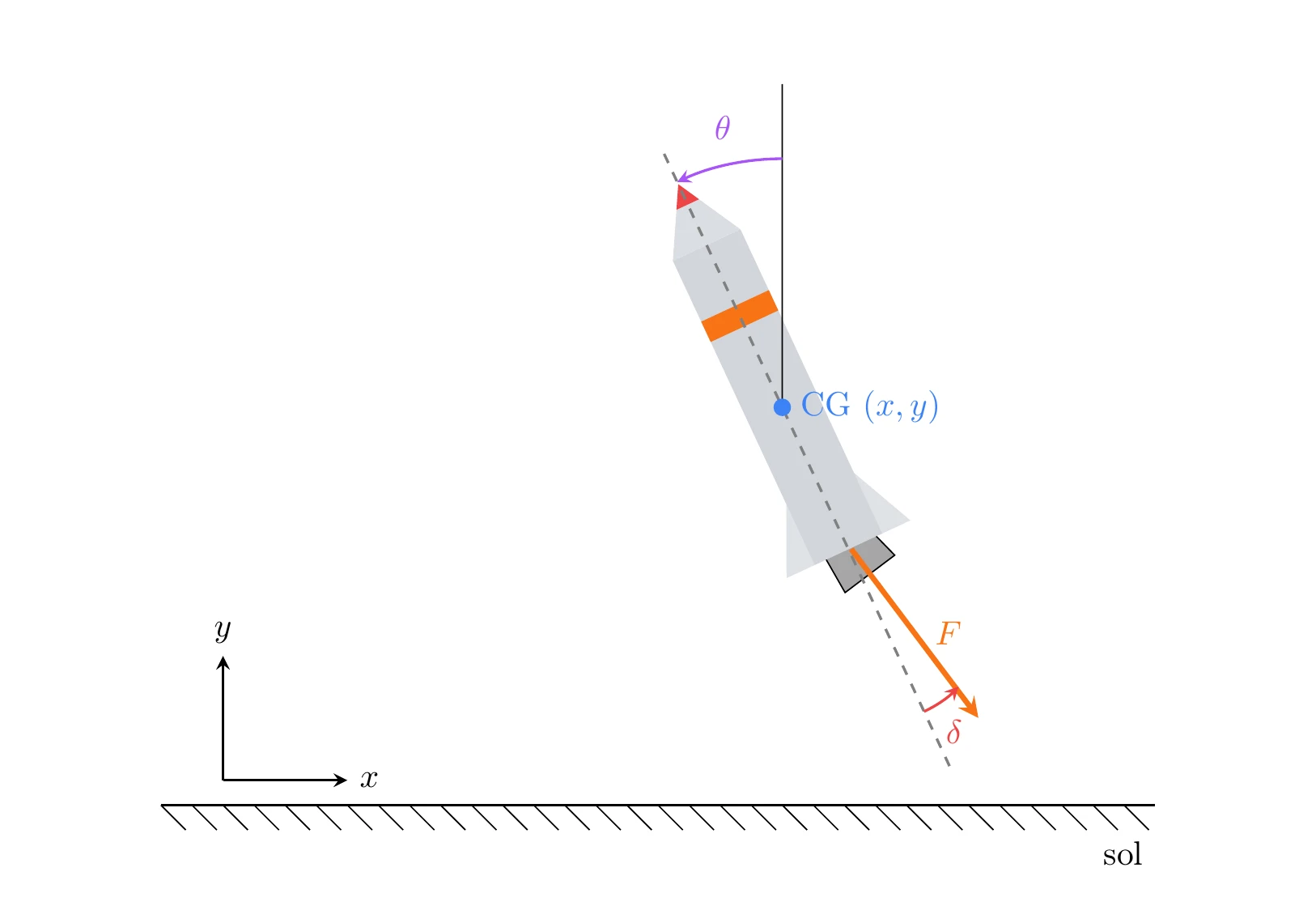
    I introduce the nonlinear planar dynamics and state the simplifications explicitly.

  2. 02

    I guide the design of pitch, horizontal-position and vertical-position loops step by step.

  3. 03

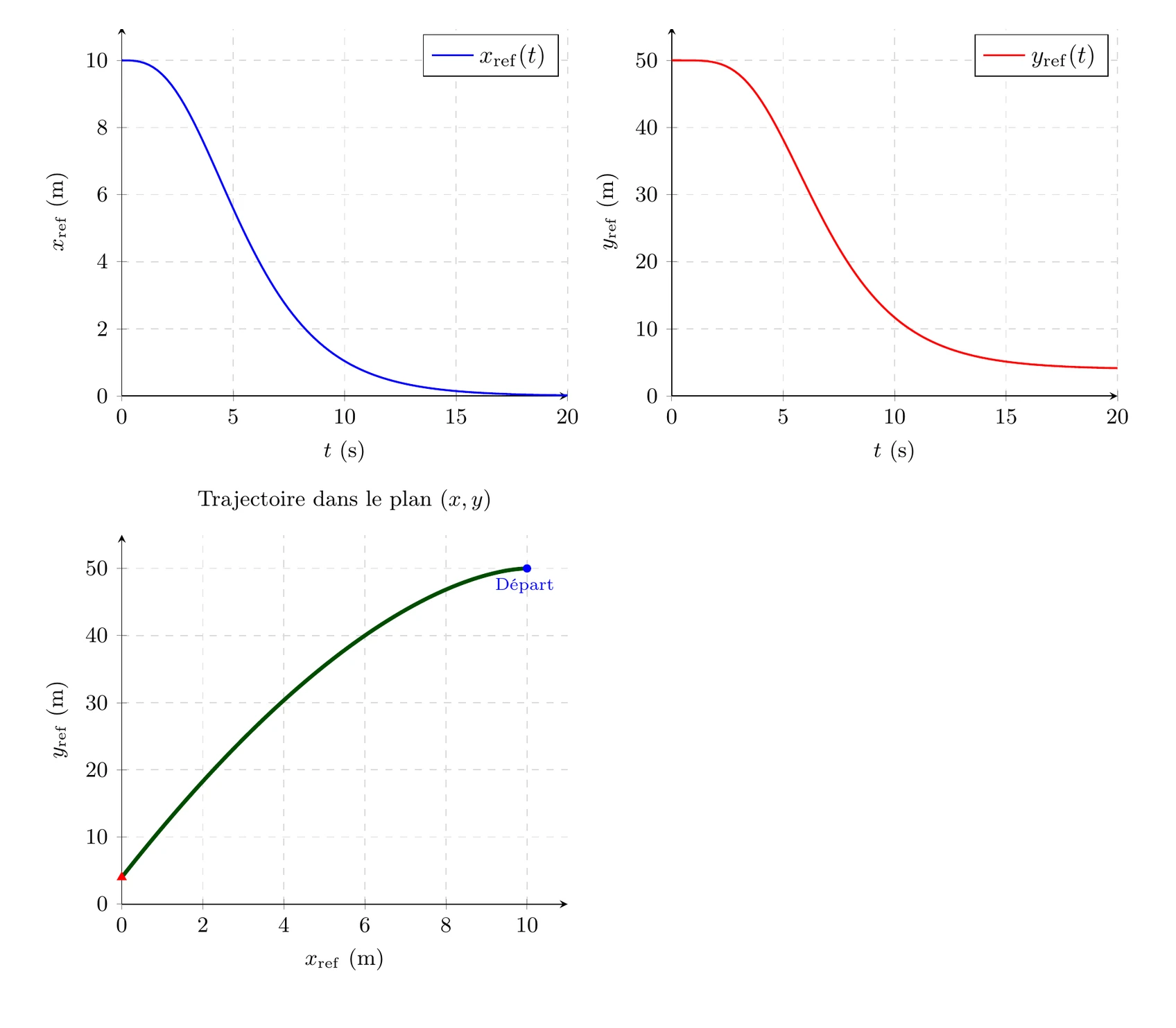
    I make the reduced and complete models comparable under smooth landing references.

  4. 04

    I close the investigation with a web simulator that exposes telemetry and landing criteria.

05 · Work and scope

What this work shows.

Materials produced

  • Applied assignment design
  • Reduced and complete Simulink models
  • Export script and browser simulation

Scope of this presentation

The model equations and exported trajectory were compared and checked.

The presentation concerns the models and exported trajectory, without a study of their effect on learning.

Visible results

  • One clear path from equations to simulation
  • A reduced and a complete model that can be compared
  • A final visual that makes landing criteria concrete
Limits and status

I intentionally use a simplified planar rocket model: aerodynamic forces are neglected, the motion is linearized for controller design and thrust is idealized. I state these assumptions as part of the engineering reasoning.

06 · Relevance for your organisation

What this approach makes possible.

For another systems course, I can develop an applied case, its scientific figures and its simulation interface. Instructors and teaching specialists define the objectives with me and approve the model. We agree on the dependencies, files and technical skills needed to maintain it.
Is your team preparing similar content?

Explore the eight-week pilot Ask me a question

07 · Technical approach

Technical approach

Simulation systemMATLABSimulinkCanvasLaTeX
01

Comparable model layers

A reduced model supports controller design, while a complete model tests the same references under richer dynamics.

MATLAB · Simulink

Why it mattersStudents can inspect what each modelling assumption changes instead of treating simulation as a black box.

02

A simulation-to-web pipeline

MATLAB resamples the Simulink outputs and exports one trajectory that the browser can replay.

MATLAB · JavaScript

Why it mattersThe engineering model remains the source of truth while the result becomes portable and easy to review.

03

Synchronized physical and signal views

The rocket motion, control variables, plots and landing criteria advance on the same timeline.

JavaScript · Canvas · KaTeX

Why it mattersLearners can connect equations and signals to the physical outcome they produce.